

COVID-19 Testing for Children in Bakersfield, CA
Your child wakes up feeling unwell, and you’re trying to decide what comes next: a home test, a medical visit, or more time watching their symptoms. A COVID-19 test can provide useful information, but your child’s breathing, hydration, alertness, and overall condition matter too. At Pedi Center Urgent Care, we offer COVID-19 testing and sick visits for children in Bakersfield. Our team can evaluate childhood illness concerns alongside testing needs. Before coming to our Niles Street or Wible Road location, contact us to confirm available tests and arrival instructions.
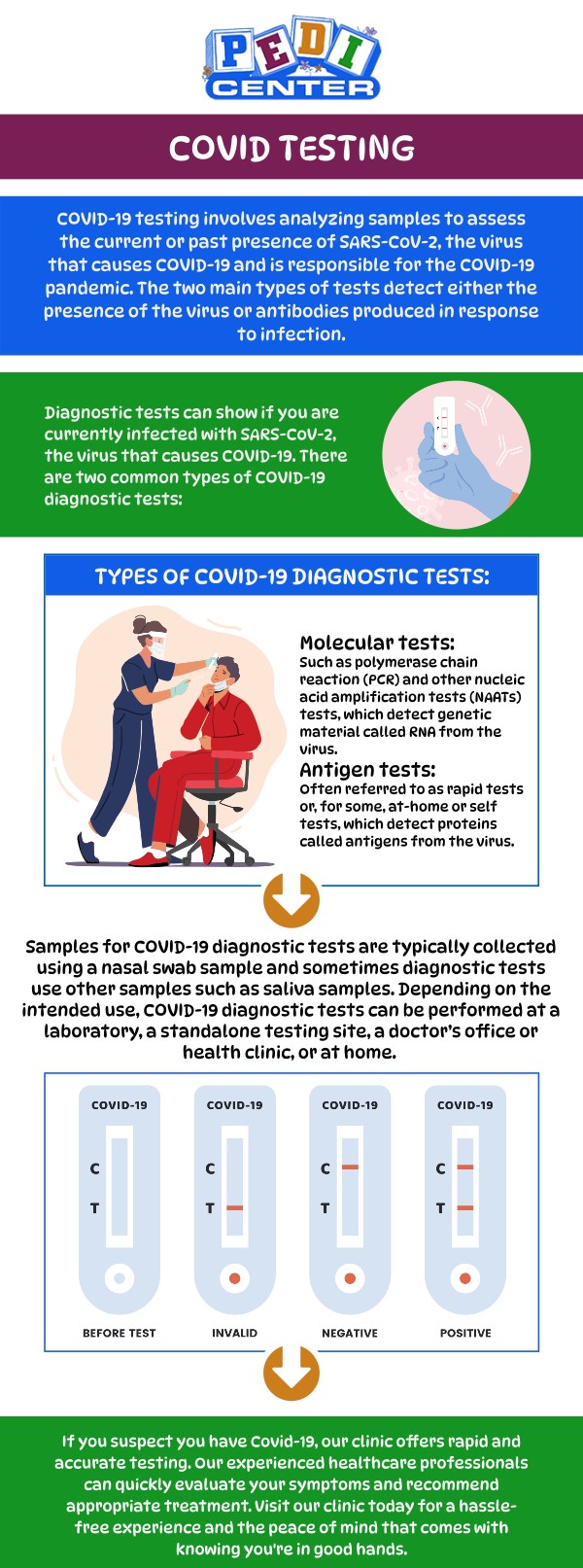
Table of Contents:
Does my child need a COVID-19 test or a sick visit?
What should I tell the clinic before bringing my child?
How can I make a nasal swab less stressful for my child?
Is a rapid test enough when someone in the household has COVID-19?
What matters most when deciding whether my child can return to school?
Which symptoms mean testing should wait while I seek care?
Talk With Our Team About Your Child’s Symptoms
Medical references
Testing answers a specific question: whether the test detects the virus that causes COVID-19. A sick visit looks more broadly at why your child feels unwell and whether they need treatment or further evaluation.
A negative home test should not be the only reason to delay care. Poor drinking, worsening symptoms, unusual sleepiness, or breathing changes need attention regardless of the result. COVID-19, flu, and other respiratory illnesses can overlap, making an examination helpful when the cause is unclear.
Our sick visits give families an opportunity to discuss symptoms beyond COVID-19 testing. When contacting us, describe how your child is acting—not just their temperature.
Have a few details ready:
• Your child’s age and when symptoms began.
• Their highest measured temperature and how you measured it.
• Whether they are drinking and urinating normally.
• Any breathing changes or unusual tiredness.
• Recent exposures and home test results.
• Current medications, underlying conditions, and recent COVID-19 infections.
These details help us understand the reason for the visit. Tell our team about symptoms before arrival so we can provide current instructions for entering the clinic.
For a baby age 3 months or younger, a rectal temperature of 100.4°F (38°C) or higher requires immediate contact with a pediatric clinician. Even a positive COVID-19 test does not remove the need for evaluation of fever in a young infant.
Use a short, honest explanation: “The swab goes into your nose to collect a sample. It might tickle or feel uncomfortable for a moment.”
Avoid promising that your child will feel nothing. Instead, offer something they can control, such as choosing a comfort item or deciding whether to count during the collection.
Let our team know if your child has sensory sensitivities, communication needs, or a difficult experience with previous testing. Ask how you can help your child stay comfortable and safely positioned. If testing at home, follow the product’s age limits and collection instructions rather than improvising.
A rapid antigen test can be useful, but one negative result can miss an infection. Your child may have been tested before enough virus was present to detect.
For home antigen testing, FDA recommends repeating a negative test after 48 hours. Children with symptoms should have at least two tests total; those without symptoms should have at least three, each 48 hours apart. A molecular test, such as PCR, may be an alternative. Follow the specific test instructions and seek advice if symptoms continue.
Do not wait to finish repeat testing if your child is getting worse or has a condition that increases the risk of severe illness. Early medical advice matters because treatment, when appropriate, must start within the first several days.
Look at recovery rather than the calendar alone. CDC community guidance allows a return to usual activities after at least 24 hours during which symptoms have improved overall and your child has been fever-free without fever-reducing medicine.
Use added precautions for the following five days, such as improving indoor airflow, practicing good hygiene, and limiting close contact with people at higher risk. Follow the school or childcare program’s requirements too. If fever returns or your child starts feeling worse, keep them home again.
Call 911 for severe breathing difficulty, blue or gray lips or face, or difficulty waking your child.
Seek immediate medical care for ribs pulling inward with breathing, chest pain, seizures, or dehydration signs such as no urine for eight hours, a dry mouth, or no tears when crying. A test result cannot tell you whether these symptoms are safe to manage at home.
Are the COVID-19 tests in my medicine cabinet still usable?
Check FDA’s expiration information using the exact test name and lot number. Some expiration dates have been extended, but extensions do not apply to every product or box. Replace tests that are past their confirmed expiration date.
What if my child seems better, then develops fever and a rash?
Seek medical advice promptly. An ongoing fever with symptoms such as rash, stomach pain, vomiting, diarrhea, or bloodshot eyes can require evaluation for MIS-C, a rare but serious complication associated with COVID-19. Severe abdominal pain or breathing trouble requires emergency care.
Can a negative test explain ongoing tiredness after COVID-19?
No. A routine COVID-19 test does not diagnose or exclude Long COVID. Persistent symptoms affecting school or daily activities deserve evaluation, including consideration of other causes. You do not need to wait months before discussing concerns with your child’s healthcare professional.
Does every child with COVID-19 need prescription treatment?
No. Antiviral treatment is considered for eligible children at higher risk of severe illness. Age, weight, medical history, and medication interactions affect eligibility. Never give your child another person’s prescription.
Whether you’re unsure about a home test or concerned that your child needs an examination, contact Pedi Center Urgent Care to discuss the next step.
Niles Street: 6055 Niles Street, Bakersfield, CA 93306
Wible Road: 6640 Wible Road, Bakersfield, CA 93313
Request an appointment and confirm testing availability at your preferred location before traveling.
CDC: Testing for COVID-19
CDC: Symptoms of COVID-19
CDC: About Respiratory Illnesses
CDC: Preventing Spread When You’re Sick
FDA: Home COVID-19 Tests and Expiration Dates
American Academy of Pediatrics: Fever and Your Baby
CDC: Signs and Symptoms of MIS
CDC: Long COVID Basics
CDC: Types of COVID-19 Treatment
Check Out Our 5 Star Reviews

Additional Services You May Need
▸ Well-Child Visits
▸ School & Sports Physicals
▸ Immunizations
▸ Sick Visits
▸ Insect Stings
▸ Snake Bites
▸ Eye Trauma
▸ Poisons
▸ Nosebleeds
▸ Lyme Disease
▸ Animal Bites
▸ Spider Bites
▸ All Services




 Send Text
 How May I Help You?