

Cat Scratch Fever Treatment on Wible Road, Bakersfield, CA
At Pedi Center Urgent Care on Wible Road in Bakersfield, CA, our team treats cat scratch fever by evaluating symptoms such as fever, swollen lymph nodes, skin lesions, and fatigue. Cat scratch fever is a form of cat scratch disease that may cause more noticeable systemic symptoms. Our providers focus on early identification, symptom management, and clear care instructions to support recovery. For more information, contact us or schedule an appointment online. We are conveniently located at 6640 Wible Road, Bakersfield, CA 93313.
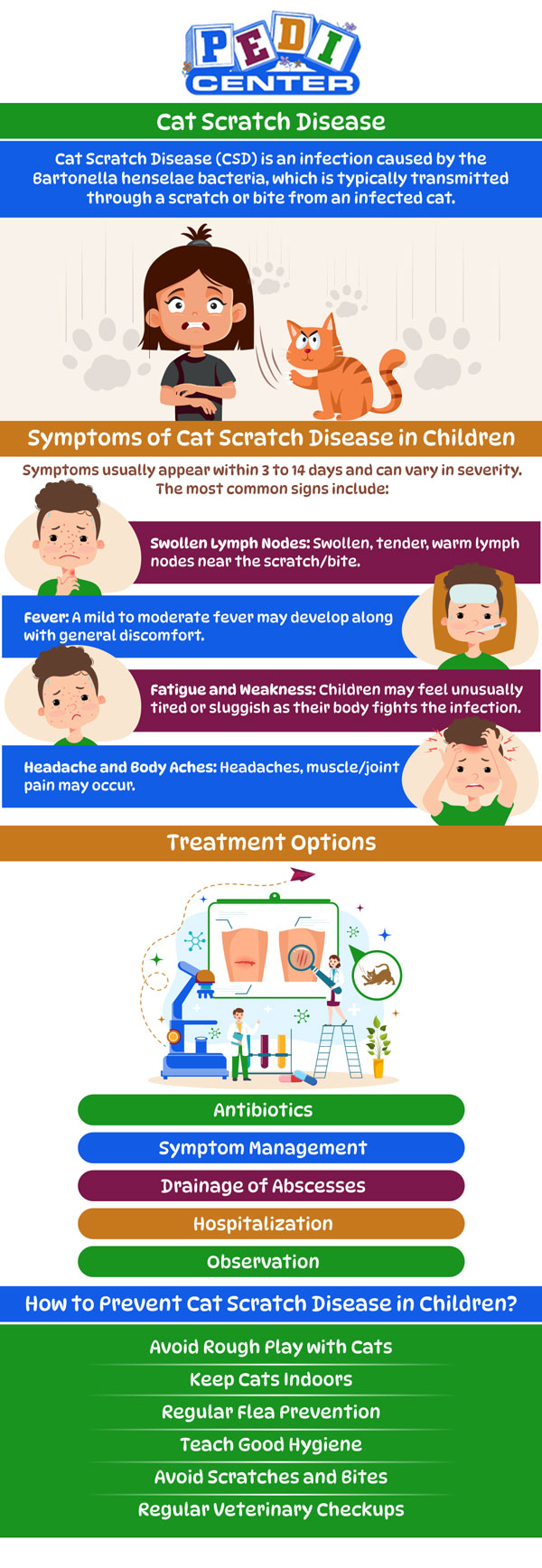
Table of Contents:
How can I get Cat Scratch Fever?
How is Cat Scratch Fever diagnosed?
Can Cat Scratch Fever cause serious complications?
Can I continue my normal activities with Cat Scratch Fever?
Compassionate Care for Cat Scratch Fever at Pedi Center Urgent Care
Cat Scratch Fever, also known as cat scratch disease, is a bacterial infection that is transmitted primarily through scratches or bites from an infected cat. The bacteria responsible, Bartonella henselae, are often carried by cats that have fleas, and the bacteria can be present in their saliva. Children are particularly susceptible because play with pets can sometimes become rough, leading to scratches or nips that break the skin. The infection can also occur if an individual touches a contaminated surface or licks a wound after contact with an infected cat. Preventive measures such as keeping cats indoors, avoiding rough play, and regular flea control reduce the likelihood of transmission, but exposure is still possible in households or neighborhoods with outdoor pets.
The transmission is usually localized to the scratch site, where redness, swelling, and sometimes a small bump appear. The bacteria then travel through the lymphatic system, which can trigger additional symptoms such as swollen lymph nodes, fever, or fatigue. Children, due to their more frequent contact with pets and tendency to handle animals without protective precautions, are more likely to experience noticeable symptoms than adults.
In addition to scratches, cat bites can also lead to infection, particularly if the wound is deep or not cleaned promptly. Open wounds provide the bacteria with direct access to the bloodstream, increasing the risk of systemic symptoms. The presence of fleas on cats plays a supporting role because the bacteria can be transferred between animals before human exposure. Identifying these transmission pathways helps families identify high-risk interactions and implement strategies to prevent the infection from occurring, which can be as simple as maintaining proper hygiene and supervising children during pet interactions.
Overall, while Cat Scratch Fever is usually mild, understanding how it spreads allows for preventive measures that are straightforward yet effective. The specialists at Pedi Center Urgent Care integrate this guidance into pediatric care routines, helping families balance safe interaction with pets and practical strategies to reduce infection risk.
Diagnosis of Cat Scratch Fever typically begins with a thorough evaluation of the child’s history and symptoms. Specialists look for signs such as redness or bumps at a scratch site, swollen lymph nodes, mild fever, and fatigue. Because these symptoms can present similarly to other viral or bacterial illnesses, a careful examination is essential to identify the infection correctly. A detailed account of any recent contact with cats, including scratches or bites, is also important information to provide. Laboratory testing is often used to confirm the presence of Bartonella henselae. Blood tests, including serological assays, can detect antibodies indicating a recent or active infection. In some cases, polymerase chain reaction tests are utilized to identify bacterial DNA directly from blood or tissue samples, providing a higher degree of certainty when symptoms are unclear or there is a risk of complications. The ability to access on-site lab services at Pedi Center Urgent Care allows for timely testing and rapid results, which help establish an accurate diagnosis without prolonged delays.
Physical examination is complemented by evaluating the affected lymph nodes and any secondary sites of infection. Swelling, tenderness, and localized warmth are documented, and in some instances, imaging may be recommended if deeper tissue involvement is suspected. This comprehensive approach ensures that the diagnosis accounts for both clinical presentation and laboratory confirmation, reducing the likelihood of misdiagnosis and guiding effective treatment plans.
By combining symptom review, detailed patient history, and laboratory testing, Cat Scratch Fever can be diagnosed efficiently and accurately. The team at Pedi Center Urgent Care prioritizes early identification to manage symptoms and prevent complications, while also providing reassurance to families.
In most children, Cat Scratch Fever produces mild symptoms that resolve within a few weeks, but there are circumstances where complications can occur. Swollen lymph nodes may become painful or form abscesses that require drainage, particularly if the infection is not addressed early. In rare cases, systemic complications can develop, affecting organs such as the liver, spleen, or eyes. Children with compromised immune systems or preexisting health conditions are more vulnerable to complications. In these situations, the infection can progress more aggressively, potentially leading to prolonged fever, widespread lymph node swelling, or persistent fatigue.
The bacterial infection can occasionally spread beyond the lymphatic system, producing neurological or cardiac effects, though these outcomes are rare. Timely evaluation and proactive care reduce the chances of these complications developing and allow for a more controlled recovery process. Cat Scratch Fever is typically manageable and self-resolving, but early intervention and careful monitoring help minimize the risk of serious outcomes. The team at Pedi Center Urgent Care combines medical expertise, laboratory testing, and practical guidance to ensure that children recover fully while complications are anticipated and addressed promptly when necessary.
For most children with Cat Scratch Fever, daily activities can continue with minimal disruption. Mild symptoms like fatigue or low-grade fever may require brief rest periods, but children can often attend school, play, and engage in normal routines once comfort allows. Avoiding further irritation to the scratch or bite site and monitoring for worsening symptoms, such as increased swelling or fever spikes, are important steps to take.
The specialists at Pedi Center Urgent Care may recommend temporary adjustments to activity based on symptom severity. Families are directed to maintain hygiene around affected areas and to supervise children during pet interactions to prevent new scratches or bites during the recovery period. Symptom management, including fever control and wound care, supports a safe return to routine activities. Antibiotic therapy may be prescribed when appropriate, and adherence to the treatment plan helps children regain full energy levels sooner. Follow-up assessments allow for monitoring progress, ensuring that normal activity can resume without risk of setbacks or complications.
Pedi Center Urgent Care provides attentive, pediatric-focused care for children with cat-scratch fever. Our team takes the time to explain symptoms, expected recovery, and when follow-up may be needed. With walk-in availability and experienced providers, families on Wible Road in Bakersfield can access timely care without unnecessary delays. For more information, contact us or schedule an appointment online. We are conveniently located at 6640 Wible Road, Bakersfield, CA 93313. We serve patients from Bakersfield CA, Maltha CA, Kayandee CA, Rosedale CA, Oildale CA, Lamont CA, and surrounding areas.
Check Out Our 5 Star Reviews



Additional Services You May Need
▸ Well-Child Visits
▸ School & Sports Physicals
▸ Immunizations
▸ Sick Visits
▸ Insect Stings
▸ Snake Bites
▸ Eye Trauma
▸ Poisons
▸ Nosebleeds
▸ Lyme Disease
▸ Animal Bites
▸ Spider Bites
▸ All Services




 Send Text
 How May I Help You?