

Cat Scratch Disease Treatment on Wible Road, Bakersfield, CA
At Pedi Center Urgent Care on Wible Road in Bakersfield, CA, our medical team evaluates and treats cat scratch disease with a focus on symptom relief and careful monitoring. This condition, caused by bacteria transmitted through cat scratches or bites, often presents with swollen lymph nodes, fever, and fatigue. Our providers assess symptoms, exposure history, and overall health to guide appropriate care and follow-up. For more information, contact us or schedule an appointment online. We are conveniently located at 6640 Wible Road, Bakersfield, CA 93313.
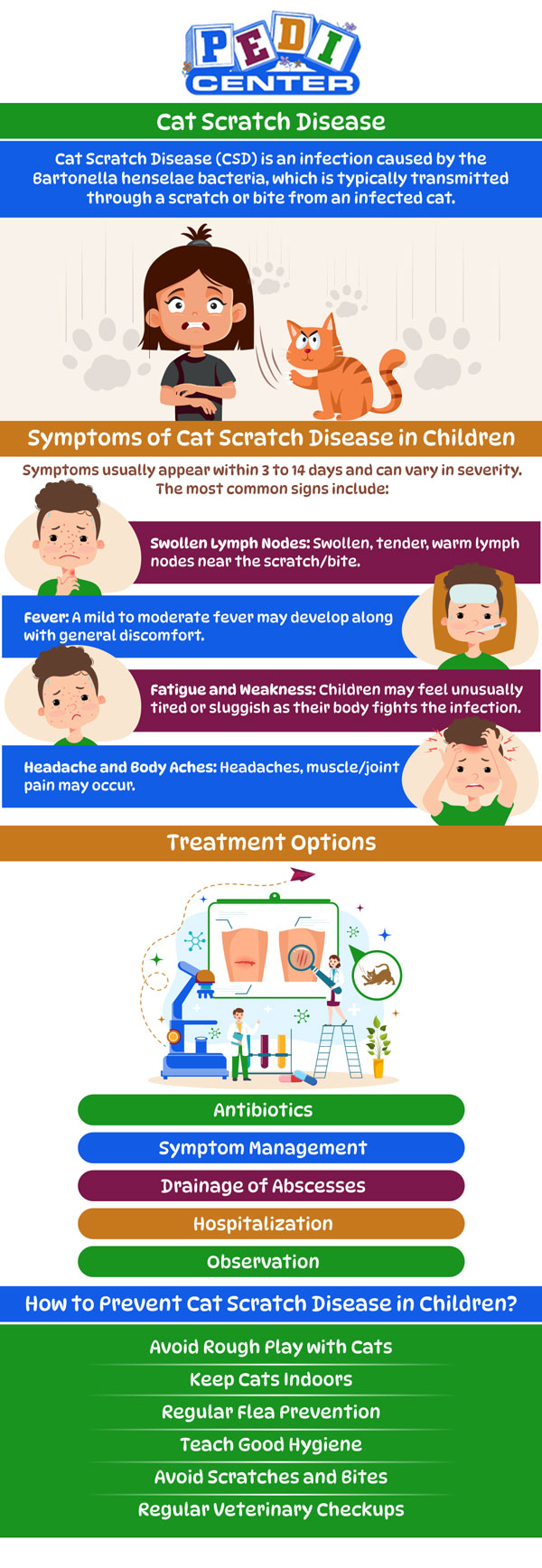
Table of Contents:
How am I able to tell if I have Cat Scratch Disease?
What are the symptoms of Cat Scratch Disease?
Can Cat Scratch Disease be prevented?
What happens if Cat Scratch Disease is left untreated?
Focused Pediatric Evaluation for Cat Scratch Disease at Pedi Center Urgent Care
Cat Scratch Disease is a bacterial infection that usually occurs after a scratch or bite from a cat carrying Bartonella henselae. Early signs often appear at the site of the scratch, where redness, swelling, or a small bump develops within a few days. Children may also experience tenderness or itching around the affected area. The infection travels through the lymphatic system, and swelling of nearby lymph nodes often follows. At Pedi Center Urgent Care, specialists evaluate both visible signs at the scratch site and symptoms to determine whether the infection is present, combining careful examination with a detailed history of recent pet interactions.
Diagnosis also depends on observing general symptoms that can appear anywhere from three days to two weeks after exposure. Mild fever, fatigue, and a general feeling of unwellness are common indicators, alongside enlarged lymph nodes that can sometimes become firm or tender. Blood tests may be used to confirm the presence of Bartonella bacteria, providing clarity in cases where symptoms overlap with other illnesses. Children with subtle symptoms may benefit from laboratory testing to ensure an accurate diagnosis and avoid unnecessary delays in treatment. Unlike minor scratches that heal quickly, the redness or bump associated with this infection can persist, accompanied by swelling that increases over several days.
Identifying Cat Scratch Disease relies on a combination of wound observation, symptom tracking, and history of contact with cats. The team at Pedi Center Urgent Care uses this information along with laboratory confirmation to make an informed diagnosis.
The symptoms of Cat Scratch Disease typically begin at the site of the scratch or bite, where a small red bump or blister forms. The area may be tender, itchy, or slightly swollen as a result of the body’s initial response to the bacterial infection. This local reaction usually develops within a few days of exposure and signals that the bacteria have begun to travel through the lymphatic system. As the infection progresses, lymph nodes near the scratch site often swell and may become firm or painful. Fever, fatigue, and general malaise frequently accompany the swelling, signaling that the body is mounting an immune response. Some children may develop additional minor symptoms, such as headache, muscle aches, or mild nausea.
In some cases, the infection can cause more pronounced lymph node enlargement that requires careful monitoring. Abscess formation or tenderness extending beyond the immediate area of the scratch is possible, though rare. At Pedi Center Urgent Care, specialists are trained to identify signs of more severe presentations, ensuring that children who develop unusual or worsening symptoms receive additional evaluation and care. Early recognition of these warning signs helps prevent complications and allows for timely intervention.
Children with Cat Scratch Disease generally recover within a few weeks, but symptom severity varies depending on age, immune status, and the extent of exposure. The combination of local symptoms at the scratch site, lymph node involvement, and systemic effects like fever or fatigue provides a clear picture for diagnosis.
Prevention of Cat Scratch Disease centers on reducing exposure to Bartonella bacteria in cats and minimizing opportunities for scratches or bites. Keeping cats indoors limits their contact with other potentially infected animals, while regular flea prevention reduces the likelihood of bacteria transmission. Families are guided on how to safely interact with pets, including gentle handling and supervision during play to prevent rough interactions that can lead to scratches. Teaching children proper hygiene is another key preventive strategy. Washing hands after touching cats, avoiding face or wound contact, and cleaning minor scratches immediately with soap and water all reduce the chance of infection. Families are also encouraged to monitor pets for signs of illness and schedule routine veterinary care. These preventive measures collectively create a safer environment for children who live with or regularly interact with cats. Children who play outdoors with multiple animals, handle stray cats, or engage in unsupervised pet play are more likely to encounter Bartonella bacteria.
While no method completely eliminates the possibility of Cat Scratch Disease, a combination of pet management, hygiene practices, and supervised interaction significantly reduces risk. Preventive guidance from Pedi Center Urgent Care equips families with strategies that protect children, maintain healthy relationships with pets, and create peace of mind for parents and caregivers.
In many cases, Cat Scratch Disease resolves on its own without medical intervention, producing mild symptoms that disappear within a few weeks. However, leaving the infection untreated can occasionally result in complications, particularly if lymph node swelling becomes severe or abscesses form. Persistent fever, prolonged fatigue, or enlargement of multiple lymph nodes may indicate that the infection is progressing and requires medical attention. Rarely, untreated cases can spread beyond the lymph nodes, affecting organs such as the liver, spleen, or eyes. Children with weakened immune systems are more vulnerable to these systemic effects, making timely evaluation and treatment important. Antibiotic therapy, when indicated, can prevent progression, manage discomfort, and shorten recovery time. At Pedi Center Urgent Care, early assessment ensures that children receive intervention when necessary, even if symptoms initially appear mild.
Failure to address the infection can also prolong symptom duration, with lymph node tenderness and low-grade fever lasting several weeks. This can interfere with normal activities such as school, sports, or play, and can create discomfort that impacts sleep and appetite. Monitoring symptoms and seeking timely care allows for symptom management, reducing the likelihood of extended discomfort or secondary complications.
By ensuring proper care and guidance, the specialists at Pedi Center Urgent Care help children recover fully while avoiding preventable complications. Timely evaluation, wound management, and, when necessary, antibiotics provide a safety net, allowing children to resume normal activities quickly while safeguarding overall health and well-being.
At Pedi Center Urgent Care, our team understands that cat scratch disease can be concerning for both children and parents. We provide timely evaluations, symptom monitoring, and guidance to help reduce discomfort and prevent complications. With a child-centered approach and convenient access on Wible Road, families can feel confident knowing their child’s condition is being carefully addressed. For more information, contact us or schedule an appointment online. We are conveniently located at 6640 Wible Road, Bakersfield, CA 93313. We serve patients from Bakersfield CA, Maltha CA, Kayandee CA, Rosedale CA, Oildale CA, Lamont CA, and surrounding areas.
Check Out Our 5 Star Reviews



Additional Services You May Need
▸ Well-Child Visits
▸ School & Sports Physicals
▸ Immunizations
▸ Sick Visits
▸ Insect Stings
▸ Snake Bites
▸ Eye Trauma
▸ Poisons
▸ Nosebleeds
▸ Lyme Disease
▸ Animal Bites
▸ Spider Bites
▸ All Services




 Send Text
 How May I Help You?